Foreign Relations
Stephan Haggard, professor of Korea-Pacific Studies at UCSD, on the
relation between North Korean political tension and the
responsibility of food aid. Interview
relation between North Korean political tension and the
responsibility of food aid. Interview
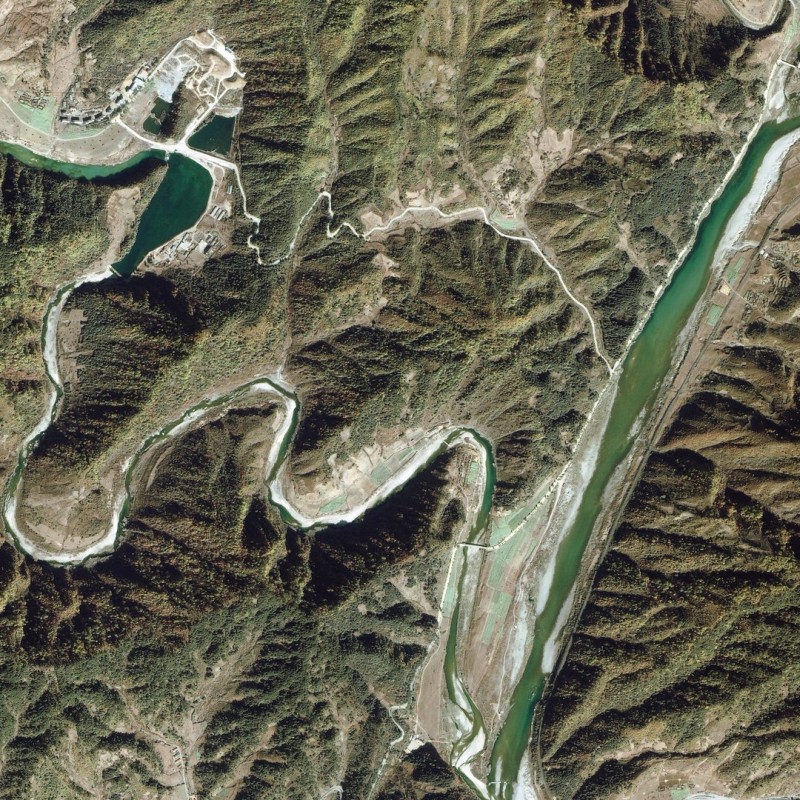
Myohyang Mountain in Hagap, a suspected nuclear base in North Korea. Universal Image Group
|
"This notion [that] by not talking to people we are punishing them has not worked. It has not worked in Iran, it has not worked in North Korea. In each instance, our efforts of isolation have actually accelerated their efforts to get nuclear weapons."
- Senator Barack Obama, September 26, 2008 When North Korea's nuclear plans were discovered, many countries still sent aid to the DPRK due to the Arduous March. Foreign relations were strained as a result, as countries began to question whether or not to keep sending aid to an unstable country that was creating WMDs.
|
|
|
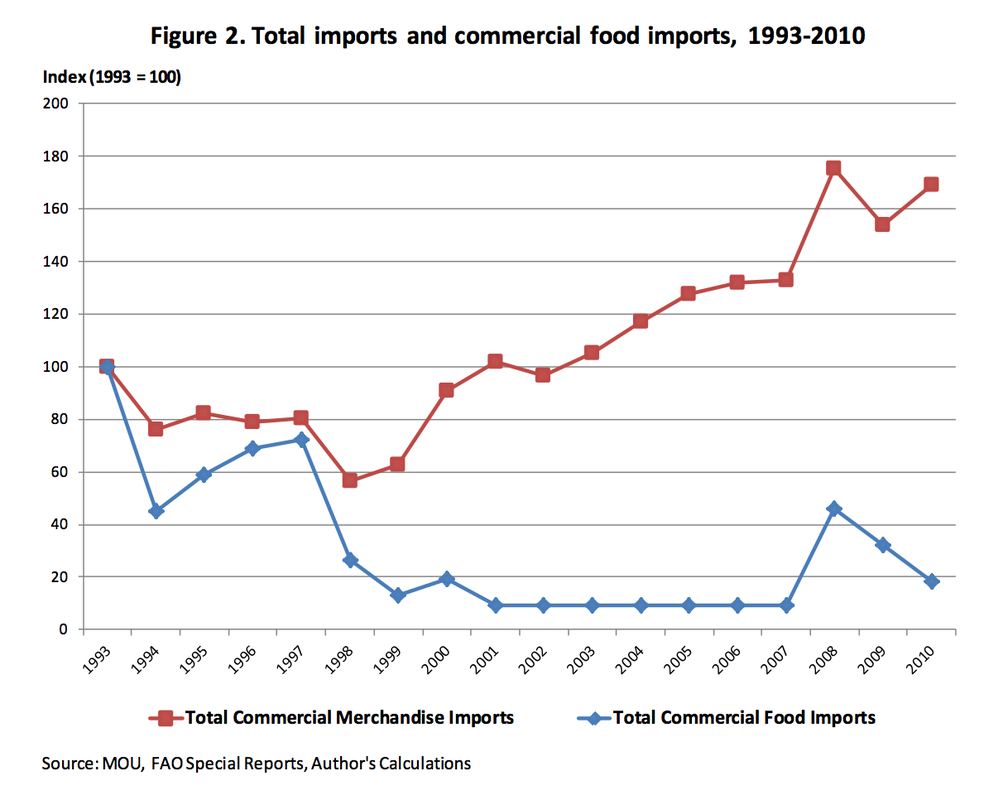
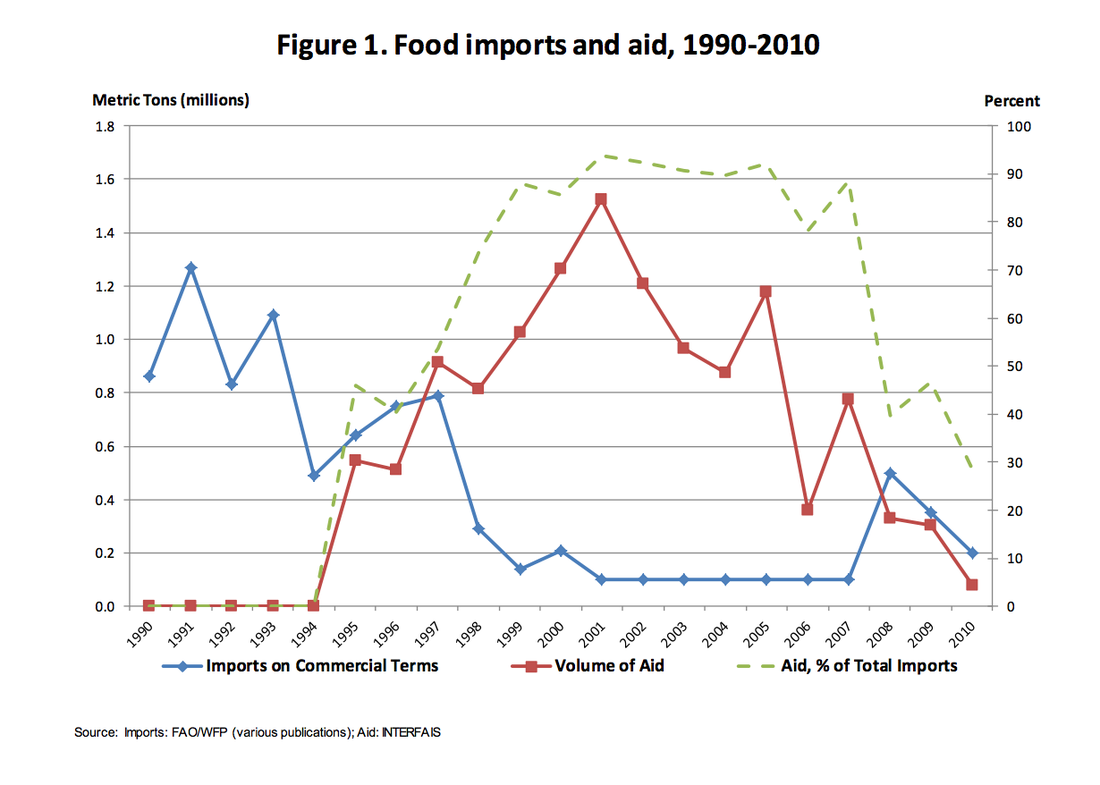
Data tables analyzing the quantities of commercial food imports and aid to North Korea. North Korea and the Right to Food by Marcus Noland
ABC News video regarding missile launch from DPRK. ABC News
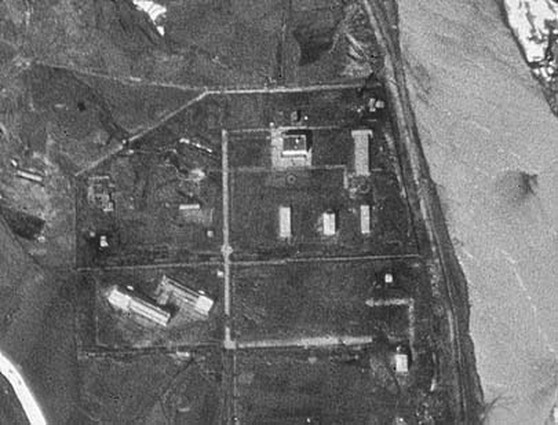
Satellite image of Yongbyon nuclear facility in North Korea. National Security Archive
|
The most recent of which is this deal which fell apart in 2012 which was negotiated right before Kim Jong-Il died called the leap year deal which was about 250,000 metric tonnes...and then the missile launch, satellite launch kind of broke up that deal. But that was an example of where there wasn’t officially linkage between the two but in fact everyone knew these things were going on in tandem.
- Stephan Haggard, Lawrence and Sallye Krause Professor of Korea-Pacific Studies, UCSD |
|
"[The Security Council]
1. Condemns the DPRK's launch of 12 December 2012, which used ballistic missile technology and was in violation of resolutions 1718 (2006) and 1874 (2009); 2. Demands that the DPRK not proceed with any further launches using ballistic missile technology, and comply with resolutions 1718 (2006) and 1874 (2009) by suspending all activities related to its ballistic missile program and in this context re-establish its preexisting commitments to a moratorium on missile launches; - UN Security Council Resolution 2087 (2013) |
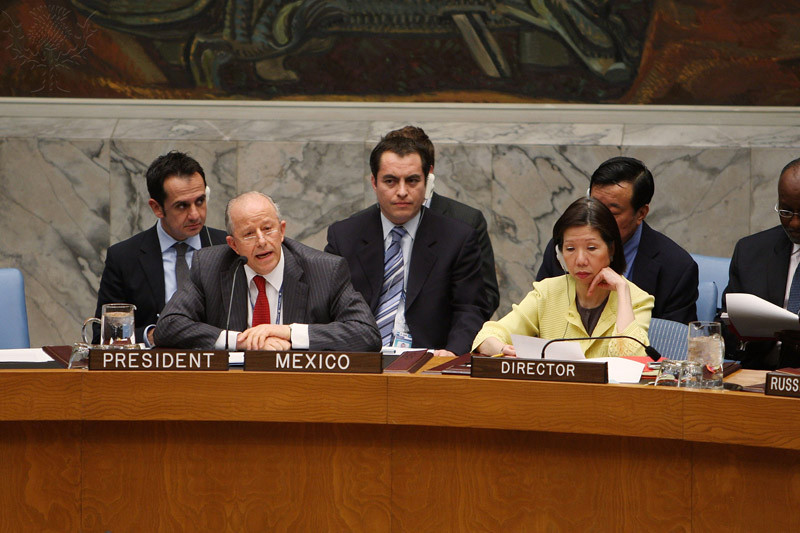
2009 UN negotiations with North Korea regarding rocket launch. Getty Images
|
"We stand before a huge ethical dilemma: Is it possible – and, if so, to what extent – to help starving North Koreans, whose fates depend on us a great deal more than on their government, if at the same time we are forever deceived and systematically blackmailed? An army armed with weapons of mass destruction is, to be sure, a permanent threat to the whole region. Let us recall that in the 1930s, Stalin unleashed a government-organized famine in Ukraine, the aim of which was to destroy the kulaks and to reinforce totalitarian power. In connection with the North Korean tragedy, we have therefore to pose the question whether through giving humanitarian aid we are at the same time reinforcing perhaps the worst political regime on the planet, a regime which is prepared to reinforce its power in the most drastic of means.”
– Václav Havel, former President of the Czech Republic
– Václav Havel, former President of the Czech Republic